Are These Really The End Times? – Exploring The Book of Revelation Artistically – Part 10
Opening Prayer
Grant us open hearts, O God, open to you and open to one another, open to the splendor of the earth and open to its pain and the pain of its people. Grant us open hearts, O God.
- J. Philip Newell, Celtic Treasure – Songs of the Soul, p. 154.
Are These Really The End Times? – Exploring The Book of Revelation Artistically:
The Book of Revelation is the strangest book in the Bible – and the most controversial. Instead of stories and moral teaching, it offers only visions – dreams and nightmares. These sessions are for all who seek to move beyond the quest to decode this book with plain answers and find an alternate way to navigate the Book of Revelation.
Recap: The Seven Congregations (Jesus Assemblies; Churches)
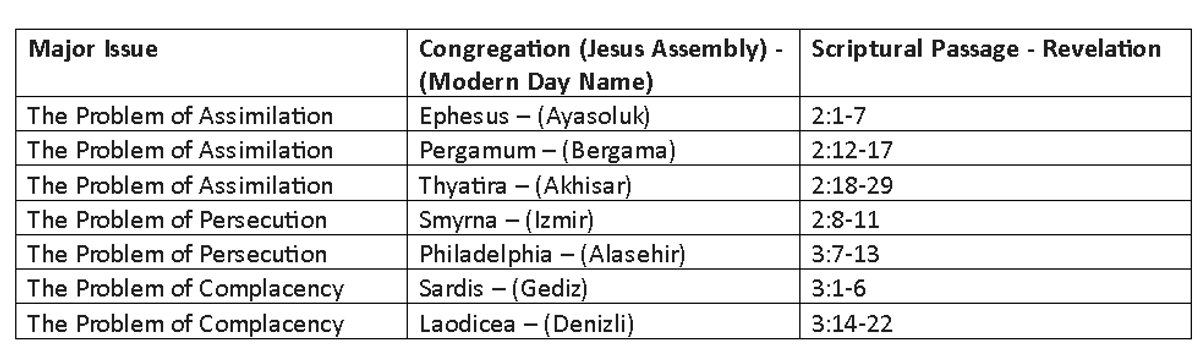
The Scroll Unsealed (Revelation 4-7)
“A divine voice beckons John to come through heaven’s open door, opening the second cycle of visions. The voice is not a new one, but the same trumpet-like voice that introduced the messages to the [congregations] (1:10; 4:1). Similarly, the visions in this second cycle do not raise new issues but deal with the issues of faithfulness that emerged in the messages to the [congregations].”
“As the previous cycle concluded, Christ stood knocking at the door, waiting for the Christian community to open to him (3:20); but before readers can respond, a new cycle begins as John is shown a door that already stands open (4:1). The contrast is provocative: as Christ asks the community to open their door to him, he opens heaven’s door to them through John’s prose. Moreover, having heard that those who conquered would sit with Christ on the throne, just as Christ conquered and sat down on God’s throne (3:21), readers are now given a glimpse of the fulfillment of Christ’s promise. They are shown a vision of God’s throne (4:2) and a vision of Christ, who conquered through faithful suffering (5:5-6).”
“The visions of Revelation 4-5 center readers on God and Christ. Those who ponder these two chapters discover the heart of the book, for here its essential revelation is to be found. Through the images of the throne and the Lamb, readers learn how God’s will is done through the crucified and risen Christ. Many readers miss the importance of this passage. Seeking to learn ‘what must take place after this’ (4:1), they quickly move to the seven seals in chapter 6, where portents of disaster loom large. When John sees ‘what must take place after this,’ however, the first vision consists not of disaster but worship. As a stone cast into a pool creates waves that move outward, the presence of God on the throne creates waves of praise that begin with the four creatures beside the throne, then surge outward to a circle of elders, to myriads of angels, and finally to every creature in heaven and on earth and under the earth, so that all creation joins in giving praises to God and the Lamb.”
“The visions in Revelation 4-7 can be called a ‘cycle’ because they begin and end with worship in the heavenly throne room. The four living creatures, the elders, and the angelic hosts that sing praises to God in chapter 4, see the Lamb receive a scroll that is sealed with seven seals in chapter 5. As the Lamb opens the first six seals in chapter 6, threatening visions relentlessly erode readers’ sense of security, pressing them to join with all who cry out, ‘Who is able to stand?’ (6:17). As if in response, John tells readers about the redeemed who are able to stand in the heavenly throne room, where they join the four creatures, the elders, and the angelic hosts in offering songs of praise to God and the Lamb (7:10-12). Only then is the seventh seal opened, bring reverent silence (8:1). The cycle begins in the presence of God and the Lamb and returns to the presence of God and the Lamb.”
The Heavenly Throne Room (Revelation 4:1-11)
“Readers can best sense the force of the majestic scene that opens this cycle by taking it as a whole. John passes through the door into heaven to find himself in a majestic throne hall, where God the sovereign presides over the celestial court. As the seer enters the hall, his eyes are drawn to the throne, where the presence of God radiates in gem-like splendor. A polished pavement stretches out before the throne like the waters of a crystal sea, and the flames of the seven torches burning before the throne illumine the hall. Flashes of lightning issue from the throne, followed by low rumbles of thunder that rise and crash. Four courtiers attend the sovereign. Their faces resemble a human being, a lion, an ox, and an eagle. All have six wings and are covered with eyes. The heavenly sovereign is also attended by twenty-four regal figures, who wear crowns and sit on thrones. The voices of the creatures soar above the thunder, and they sing praises to the Almighty, and their song is picked up by the other attendants, who rise from the thrones to bow before God’s throne, casting their crowns before him.”
“God is central to this vision. His presence is the radiant point around which the galaxy of other heavenly beings revolves, yet his appearance eludes direct description. John describes the heavenly court in a manner reminiscent of Ezekiel, who saw the throne of God together with lightning, a rainbow, a crystal sea, and four creatures. But where Ezekiel said that above the throne was ‘the appearance of a man’ (Ezekiel 1:26), John pauses, willing only to say that God’s presence was like the radiance of precious stones (4:3). The thunder and lightning that issue from the throne add to the display of God’s power, yet the dangers inherent in these phenomena also prevent people form approaching too closely. John respects the differences between the human and the divine, between the creature and the Creator. [John’s] portrayal of the throne room preserves the mystery and transcendence of God.”
(Koester)
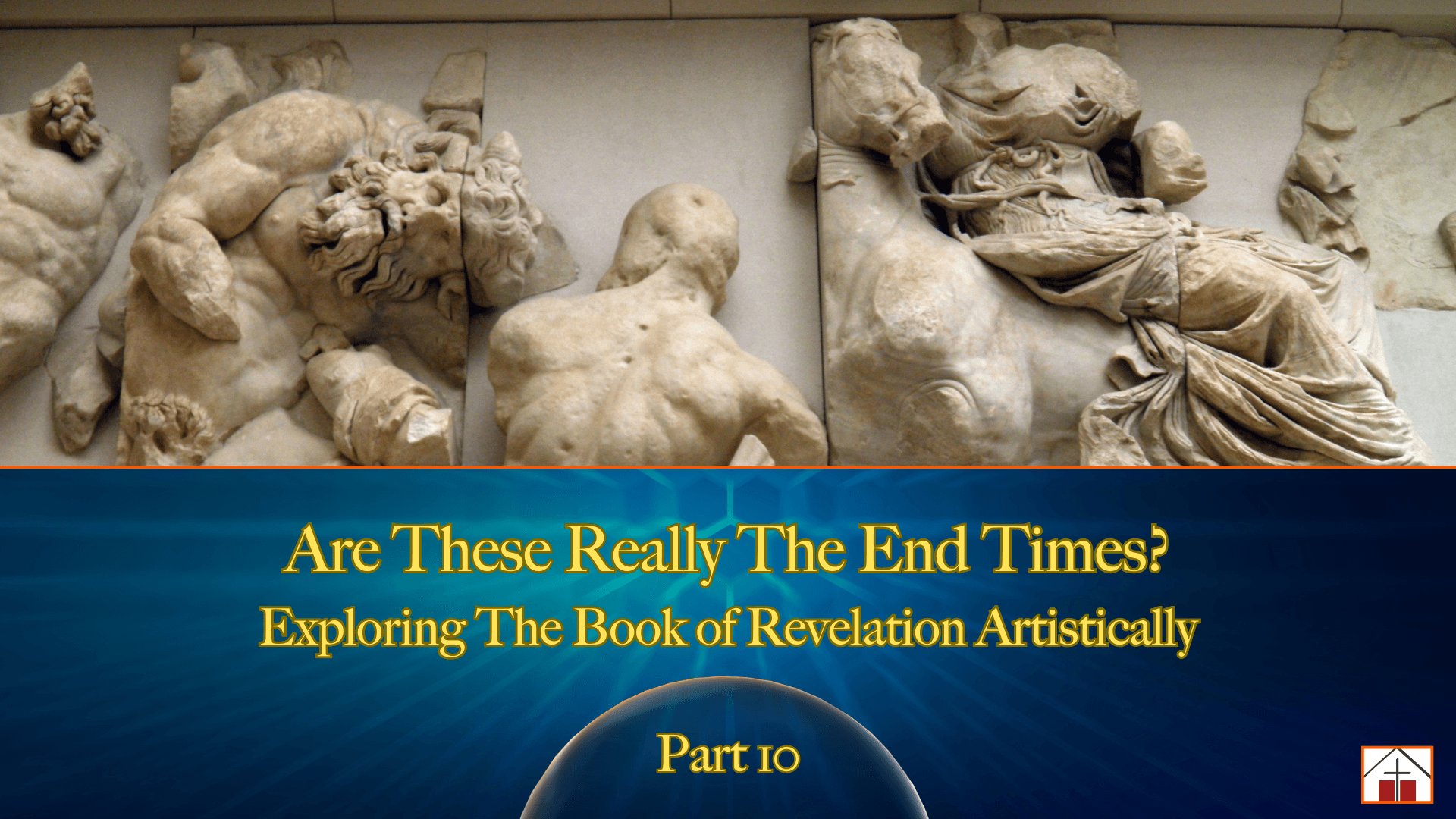
Excursus: The Great “Altar” of Pergamon (Pergamum) and the Divine Throne Room
“While the attempt to identify the Pergamon Altar as the throne of Satan is fraught with insuperable methodological problems, the monument nevertheless provides a rich comparandum with certain features of John’s images in the Apocalypse, particularly the divine throne-room scene of Revelation 4-5.”
“The iconographic and spatial semantics of the monument offer the interpreter of the Apocalypse some intriguing lines of inquiry. The three monstrous figures in the gigantomachy (in Greek mythology the struggle between the gods and the rebelling giants) - lion, bull, bird-monster – have some resonance in apocalyptic traditions as well. A reference to such monsters is found in Ezekiel chapter one as a composite of three animal-type creatures and a human. These creatures reappear in Revelation 4, where the four creatures have only one face each, and each creature receives one of the faces from the four living creatures in Ezekiel, the face of a lion, a bull, a human, and an eagle.”
(Guffey)
(Source: Andrew R. Guffey, The Book of Revelation and the Visual Culture of Asia Minor – A Concurrence of Images; Craig R. Koester, Revelation and the End of All Things.)
For this week: For reflection: Read Revelation 7:1-8:1. “Two brief visions interrupt the opening of the seven seals.”
(Source: The CEB [Common English Bible] Lectio Divina Prayer Bible.)
An invitation to our virtual participants: Discussion and comments are very much encouraged and welcomed. Online discussions can be held in the comments section in the upcoming post on Social Media for this week’s Deacon’s Reflection which is part of adult formation at St. Francis Episcopal Church.
Closing Prayer – Prayer of Blessing
The blessings of heaven, the blessings of earth, the blessings of sea and of sky. On those we love this day and on every human family, the gifts of heaven, the gifts of earth, the gifts of sea and of sky.
May the light of God illumine the heart of my soul.
May the flame of Christ kindle me to love.
May the fire of the Spirit free me to live this day, tonight, and forever. Amen.
- J. Philip Newell, Celtic Treasure – Songs of the Soul, p. 155.
Are These Really The End Times? – Exploring The Book Of Revelation Artistically,” Deacon Joe Dzugan, St. Francis Episcopal Church, 2025.